
Generators on Long IslandWhole-home generator installation — the lights stay on.
Automatic standby generators installed across Nassau and Western Suffolk — sized from a real load calculation, with the gas line and automatic transfer switch done right.
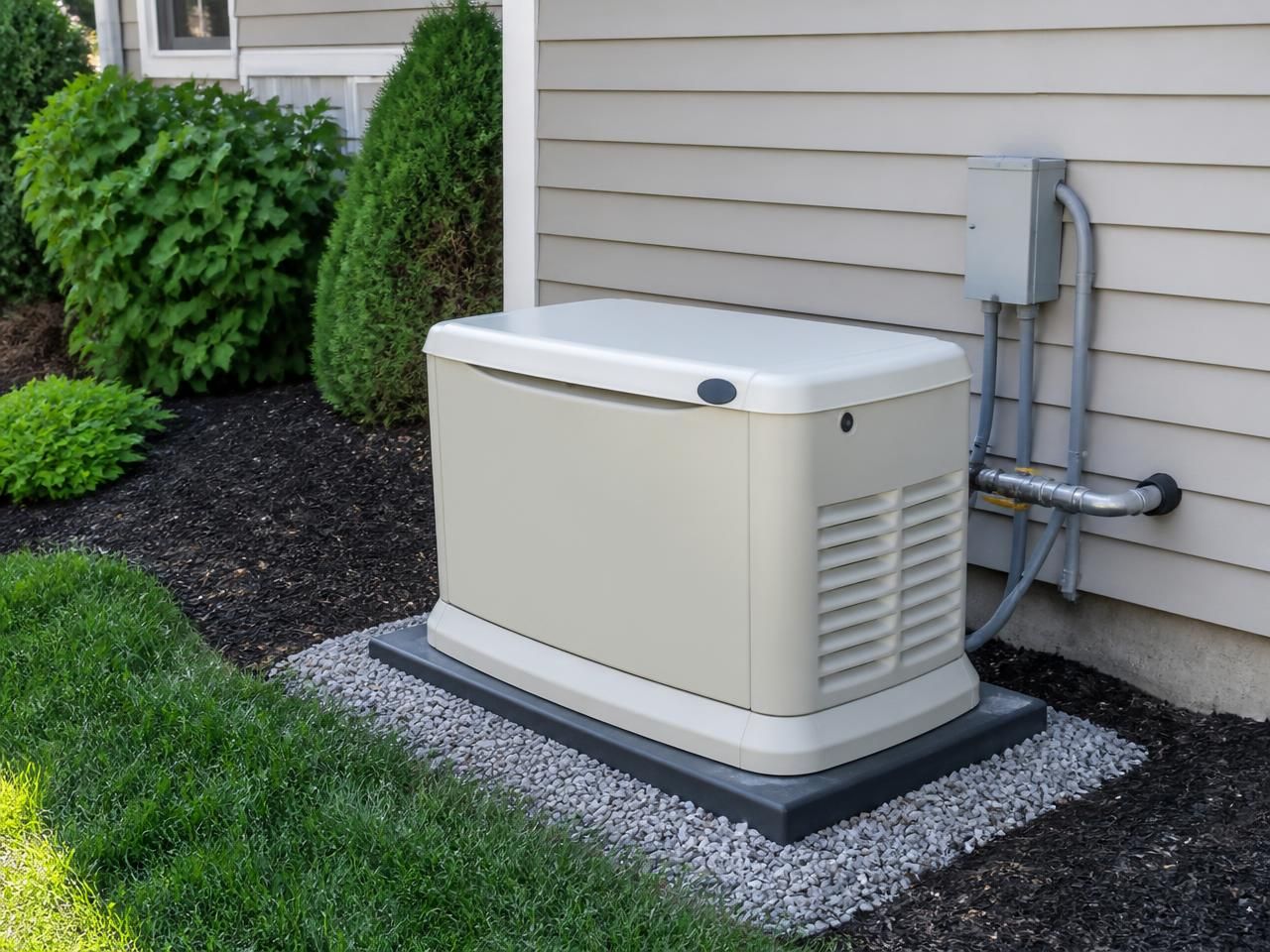
- Automatic start within 10 seconds of an outage
- Natural gas or propane — no refueling during a storm
- Load calculation, not a brochure guess
- Whole-home or essential-circuit coverage
Whole-Home Generator Installation across Nassau & Western Suffolk
Whole-home generator installation on Long Island runs $6,800–$11,500 for a 14–18 kW air-cooled unit and $12,500–$19,000 for a 22–26 kW system, including the automatic transfer switch, pad, and gas line. Most installs are completed in one to two days. We size from an actual load calculation — never a brochure guess.
Long Island loses power more often than most of the country: nor'easters, hurricane remnants, summer thunderstorm cells, and an overhead distribution grid that goes down with the trees. A standby generator is the difference between a four-day outage that costs you a freezer of food, a flooded basement from a dead sump pump, and a house that never notices. We install automatic standby systems that start themselves within seconds of an outage and shut down when utility power returns — no cords, no gas cans, nobody standing outside in a storm.
Which option is right for you?
The right answer for the large majority of Long Island homes. Runs on natural gas or propane, sits on a composite pad beside the house, covers whole-home or essential loads. $6,800–$19,000 installed depending on size and switch type.
For large homes with multiple AC systems, pools, elevators, or 400-amp service. Quieter under sustained load and built for long runtimes, but a different price class — quoted after a site visit.
The budget path: a manual interlock or inlet box lets a portable generator safely feed selected circuits. $1,800–$3,200 installed. You still have to go outside, start it, and refuel it every 8–12 hours.
Batteries are quiet and maintenance-free but typically carry a home for hours, not days, and struggle with central AC and well pumps. For multi-day Long Island outages, gas standby is still the more practical choice.
What a generator maintenance visit includes
Every visit follows the same documented checklist — so nothing gets skipped and you get a written report at the end.
Book a visitLong Island generators cost ranges
Real numbers based on actual installs across Nassau and Western Suffolk. Final pricing depends on your home — we always quote in writing before any work begins.
Get an exact quote|
Portable interlock / inlet box
Manual — you start and refuel it
|
$1,800–$3,200 |
|
14–18 kW air-cooled, essential circuits
Most common Long Island install
|
$6,800–$11,500 |
|
22–26 kW air-cooled, whole-home
Service-rated automatic transfer switch
|
$12,500–$19,000 |
|
Gas line upsize / long run
Depends on distance and existing pipe size
|
$650–$2,400 |
|
Propane tank set (no natural gas)
Buried or above-ground, tank size dependent
|
$1,200–$3,800 |
|
Annual maintenance visit
Oil, filters, valve check, load test
|
$249–$389 |
Pricing reflects typical Long Island ranges. Equipment, complexity, and incentives may increase or reduce your final cost.
What to expect, step by step
We walk the electrical panel, gas meter, and the spot where the unit will sit — code requires specific clearances from windows, doors, and the property line. You get a written load calculation, not a guess.
Whole-home and essential-circuit pricing side by side, with the transfer switch type, generator model, and any gas or electrical upgrades itemized. Nothing is bundled into a single mystery number.
Pad set, unit placed, gas line run and pressure-tested, transfer switch installed at the service, and the system commissioned under load. Most jobs take one to two days.
We walk you through the weekly self-test, the maintenance interval, and what the alarm codes mean, and register the manufacturer warranty.
Long Island homes, treated like our own
Every generators job starts with shoe covers, drop cloths, and a walk-through with the homeowner. We document with photos, explain what we found, and quote in writing — no surprises.
- Background-checked, uniformed technicians
- Photos of every issue, before & after
- Flat-rate pricing approved before we start
Every major HVAC brand, serviced and installed
Generators across Long Island
We dispatch from Levittown to every town in Nassau and Western Suffolk. Tap your town for local install notes and direct booking.
- →Generators in Babylon
- →Generators in Baldwin
- →Generators in Bellmore
- →Generators in Bethpage
- →Generators in Deer Park
- →Generators in East Meadow
- →Generators in Farmingdale
- →Generators in Freeport
- →Generators in Garden City
- →Generators in Hempstead
- →Generators in Hicksville
- →Generators in Jericho
- →Generators in Levittown
- →Generators in Lindenhurst
- →Generators in Massapequa
- →Generators in Massapequa Park
- →Generators in Merrick
- →Generators in Mineola
- →Generators in North Bellmore
- →Generators in North Massapequa
- →Generators in North Wantagh
- →Generators in Old Bethpage
- →Generators in Oyster Bay
- →Generators in Plainedge
- →Generators in Plainview
- →Generators in Rockville Centre
- →Generators in Salisbury
- →Generators in Seaford
- →Generators in South Farmingdale
- →Generators in Syosset
- →Generators in Uniondale
- →Generators in Wantagh
- →Generators in West Hempstead
- →Generators in Westbury
- →Generators in Williston Park
- →Generators in Wyandanch
Generators questions, answered
A 14–18 kW air-cooled standby generator covering essential circuits runs $6,800–$11,500 installed. A 22–26 kW whole-home system with a service-rated automatic transfer switch runs $12,500–$19,000. Those figures include the unit, pad, gas connection, transfer switch, and commissioning. Long gas runs, panel upgrades, or a propane tank set are quoted separately.
It depends on your actual connected load, not your square footage. A typical Long Island home with one central AC system, gas heat, a refrigerator, and a sump pump is well served by 18–22 kW for whole-home coverage. Homes with two AC systems, a well pump, or a pool usually need 24 kW or more. We run a written load calculation before quoting.
The physical install is one to two days. Town and utility approvals ahead of it typically take one to three weeks, so plan on roughly three to five weeks from signed proposal to a commissioned system.
If natural gas is already at the house, use it — unlimited runtime and no refueling during a multi-day outage. If you're not on gas, propane works just as well, but you'll need a tank sized for the runtime you want; a 500-gallon tank typically carries a 22 kW unit for several days of realistic cycling.
Modern air-cooled units run about 60–67 dB at 23 feet — roughly a window air conditioner. The weekly self-test lasts about five minutes and can be scheduled for a time that suits you. Placement matters for noise, and we account for it and for the code clearances from windows and doors.
Yes, with correct sizing. AC compressors draw a large startup surge, so we either size the generator for it or install a load-management module that briefly sheds a lower-priority load when the compressor kicks on. Both approaches are common; we'll tell you which is cheaper for your house.
Once a year, or every 150–200 running hours. Annual service runs $249–$389 and covers oil, filters, plugs, battery test, gas pressure, transfer switch check, and a full load test. Dead batteries cause more no-starts than any mechanical failure, which is exactly what annual testing catches.
Yes. We service and repair existing Generac, Kohler, Cummins, and Briggs & Stratton standby systems regardless of who installed them, including transfer switch faults and no-start diagnostics.
For homes with a sump pump, a well, medical equipment, or anyone working from home, usually yes — a single multi-day outage can cost more in spoiled food, basement water damage, and hotel nights than a year of the financed payment. For a home with none of those and a gas stove, an essential-circuit system at the lower end of the range is often the smarter buy.
One year on our labor plus the manufacturer's parts warranty, which runs five years on most Generac and Kohler air-cooled home standby units. We register the manufacturer warranty at commissioning.
Often paired with generators
Go beyond the equipment.
Pair generators with one of our whole-home comfort solutions — designed for Long Island climates, ductwork, and rebate stacks.
Whole-Home Zoned Comfort
End hot upstairs, cold downstairs with ductless, ducted zoning, or variable-capacity heat pumps.
Indoor Air Quality
MERV-13/16 filtration, whole-home dehumidifiers, UV-C, and ERV ventilation systems.
Rebates & Financing
Utility incentives on qualifying systems, plus $0-down Synchrony financing on approved credit.
Need generators on Long Island?
Talk to a real Long Island technician — usually same-day appointments, flat-rate pricing, and a 1-year warranty on every visit.